


Aug 2026Read full article
What Architect Fees Cover in Cyprus (and How They're Structured)
What architect fees cover in Cyprus and how they are structured — the written commission rule, the work stages, and what sits outside the fee.
Check that the home was built as the approved plans show, then check what the developer finished: the structure and any cracks, damp and drainage, doors and windows, the finishes, the services you can see and test, and the shared areas. Do it before you accept the home, while the developer still has the most reason to fix what you find.
This guide is the checklist our civil engineer uses at a handover, written for buyers. It covers what to bring, what to look at part by part, the problems we find most often in new buildings in Cyprus, and what to do with the list once you have it.
New homes have problems too: damp, cracks, poor finishes and work that was never finished. Many of them are hard to see on a short walk round with the developer's representative, and some are dangerous.
Timing matters more than anything else on this list. Before you accept the home, a written list of defects puts you in the strongest position to have them fixed. After you accept it, you depend more on the goodwill of the developer and on the terms of your contract.
The developer's engineer works for the developer. That is normal, and it is also why the person checking the home for you should work only for you. If you have already moved in, read your contract for how long the developer must fix defects, and have the home checked before that time runs out.
You do not need special equipment for a first check. You need the documents that say what you bought, and a way to record what you find.
Work through the home in the same order every time, so nothing is skipped. These are the parts our engineer checks, in the order he checks them.
Walk the home with the approved plans in hand. Check the layout, the room sizes, where the kitchen is, which way the doors open and where the bathrooms are. In a recent handover we found a kitchen that had been moved, an island that was missing, and a bathroom door that hit the toilet.
Look at walls, ceilings, balconies, stairs and the parking floor. A fine line in fresh plaster is common; a crack that is wide, long, runs at an angle or appears in several places is a reason to ask an engineer. Photograph each one with a coin or a ruler beside it.
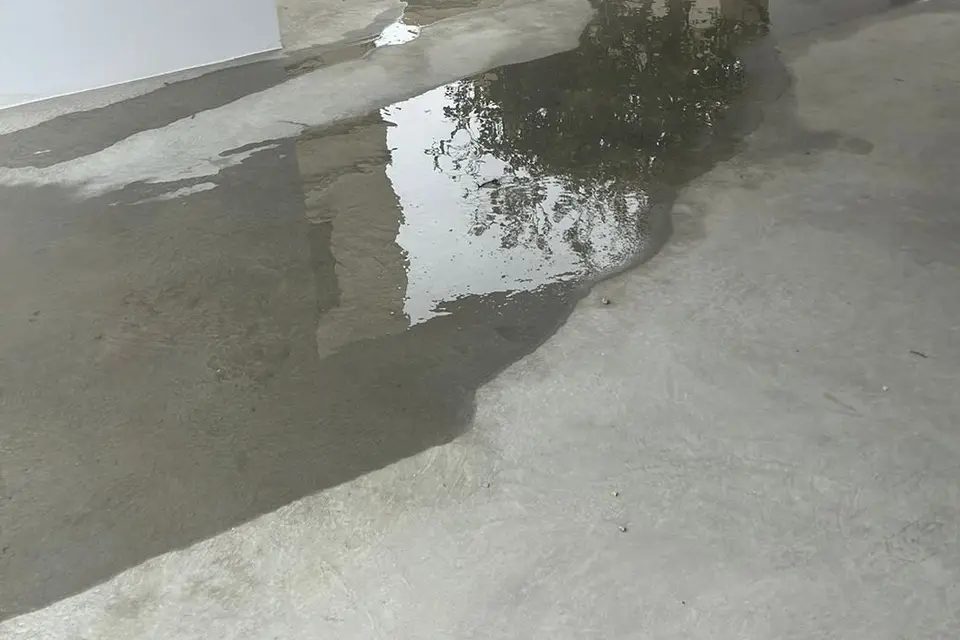
Check balconies, terraces, the roof, showers and every drain. Pour a little water and watch where it goes: it should run to the drain, not sit or run towards the door. Look for stains, flaking paint and a damp smell, especially low on walls and around windows.
Open, close and lock every door and window. Check the seals, the handles and the glass. On balconies, check that every glass panel and railing is in place and firm, because a missing panel is a fall risk, not a finish.
Look along walls and floors in low light to see unevenness. Check tiles for chipped or badly cut edges and tap them: a tile that sounds hollow may not be properly bedded. Check grout, paint, skirting and the kitchen units, including every drawer and hinge.
Try every switch, light and socket. Run the hot and cold water in every tap and shower, flush every toilet and watch the drains empty. Switch on the air conditioning, the water heater and the bathroom fans. Note anything that does not work or is missing.
Walk every stair and check every step and handrail. In one handover the last step to the roof terrace stood off the floor, a gap someone could trip on. Loose railings, missing glass and sharp edges go at the top of the list.
Check the entrance, the lift, the parking, the roof and the drainage around the building. For a house, walk the plot, the boundary walls and the gates. Problems in shared areas affect your home too, and they are easiest to raise while the developer is still on site.
In January 2026 we inspected two brand-new apartments in Larnaca before handover and found more than 20 problems. Two of them were dangerous: a missing piece of balcony glass and a gap at the top of the stairs. The kitchen was not built as the plans showed, rain stayed on the balconies, the terrace and the parking floor, and both bathrooms had badly cut tiles.
We went back in May. The balcony glass was still missing, and new cracks had appeared in the parking floor. That is the pattern we see most: some items are fixed, some are not, and new ones appear once the building has been through a season.
A list handed over is not a list fixed. The second visit, after the repairs, is where the first one pays off.
A list works best when the developer receives it in writing before you accept the home. If you have already accepted it, a written list with photos still matters: ask your lawyer how and by when to send it.
Email the list with the photos to the developer, and keep a copy. A list given by voice on the day is easy to forget.
Ask for a written answer on each item: what will be fixed, by whom and by when. Urgent and dangerous items first.
What you sign at handover can matter later. Your lawyer can tell you what your contract allows and what to write on the acceptance.
When the developer says the work is done, check it against the list again, item by item, with new photos.
Many buyers of new homes in Cyprus are not in Cyprus on the handover date. You do not need to fly in for it. Someone you trust can collect the keys, walk the home with you on a live video, send the list to the developer and follow the repairs. Make sure that person works for you, not for the developer or the agent who sold you the home.
This checklist will help you find most of the problems you can see. What it cannot give you is an engineer's eye: knowing which crack matters, which damp patch has a cause behind it, and what the approved plans actually require.
Our new-build handover inspection is that check, done by Constantinos Loizou, our civil engineer, from €500 depending on the size of the building and where it is. You get a signed report with photos that says what is urgent, what can wait and what we recommend, usually in 2 to 3 days, and a short call in your language to go through it. You can read how we inspect, step by step, before you decide.
Buying a resale home instead? The same questions apply to an older building, with different answers: see our property inspection report.
What architect fees cover in Cyprus and how they are structured — the written commission rule, the work stages, and what sits outside the fee.

The licence check that takes five minutes, what the contract has to contain, how hidden costs get in, and where an independent professional fits between you and the build.

What a Limassol build actually costs in 2026 — the rate per m², what that rate leaves out, why the city costs more than Paphos or Larnaca, and how VAT works on a first home.