


Aug 2026Read full article
Cost of Building a House in Cyprus, 2026
What it costs to build a house in Cyprus in 2026 — the rate per m², a full worked budget from plot to keys, and where the number really moves.
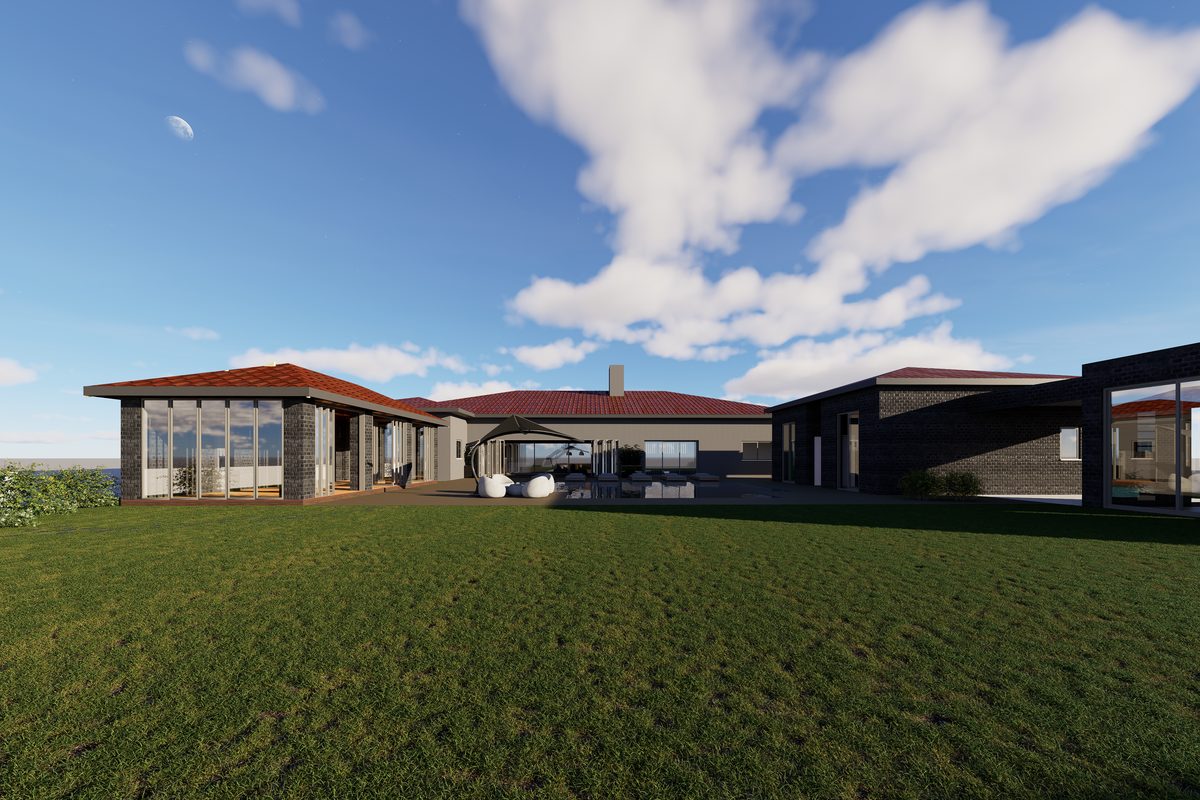
A building plot in Cyprus is worth what you can legally build on it, which is rarely obvious from standing on it. Before anything else, two things tell you almost everything: the planning position for the plot, meaning its zone, building coefficient, coverage and permitted height, and a search certificate from the Department of Lands and Surveys showing who owns it and what is registered against it. Both can be established before you commit, and both are inexpensive next to the purchase.
Everything else follows from those two. This guide sets out the checks in the order that saves the most money, which means starting with the ones that can disqualify a plot in an afternoon and leaving the expensive investigations until a plot has survived them.
Every plot in Cyprus sits in a planning zone, and the zone sets the arithmetic of what can be built. Four numbers matter:
The coefficient is the one that decides whether your brief fits. Multiply the plot area by the coefficient, and you have the total floor area you may build. A 1,000 m² plot with a coefficient of 90% permits 900 m² of building; a 600 m² plot at 60% permits 360 m². That single calculation resolves most “will my house fit here” questions before anyone draws anything.
Coefficients vary widely, and some zones are restrictive by design. Green belt and agricultural zones carry low factors. Protected areas including woodland, archaeological and historical sites and wetlands can carry effectively nothing at all. A plot advertised as “land” is not necessarily a plot you can put a house on.
The buildable figure also carries a second consequence. It is the measure the reduced VAT rate is assessed on, and the thresholds are unforgiving above 190 m². Our VAT guide explains how that works, and it is worth reading before you commit to a plot that pushes your design past the ceiling.
The zone parameters come from the Local Plan for the area, and an architect can read them against your brief in a short review. Where you want the authority's own position on your specific plot rather than an interpretation of the plan, there are two statutory routes, and neither is widely known among buyers.
One mechanical caveat on the EA8, because it catches buyers out. The route is available to the owner, and before completion you are not the owner. In practice this is handled by arrangement with the seller: the application goes in under the seller's name, and the buyer funds it, in exchange for seeing the answer before committing. A seller who refuses that arrangement outright has told you something.
The Planning Authority is the statutory body, with powers delegated by Delegation Order. In practice, that means your district organisation, the EOA, with submission through Ippodamos.
Three further questions are worth putting to the same process: whether the plot touches a Green Buffer Zone or a coastal setback, whether it needs consolidation or a coefficient transfer to be developable, and whether anything about it triggers an environmental assessment. Any of those turns a straightforward permit into a long one, as our building permit guide sets out.
Worth knowing at this stage too: a planning permission application requires confirmation that an application has been submitted to the Department of Lands and Surveys for the issue of an external boundaries certificate. On a plot with uncertain or disputed boundaries, that is a step best discovered now rather than after purchase.
The legal check runs in parallel and is inexpensive. A search certificate from the Department of Lands and Surveys is obtained per plot for a small fixed fee, and shows ownership, mortgages, memos, encumbrances and registered rights of way.
Since late 2023, it is not optional in practice. Law N. 132(I)/2023 requires the seller to include, as an integral part of the contract, a Land Registry search certificate no more than five working days old at the point of signing. That rule exists because stale searches were hiding late-arriving encumbrances, and it gives a buyer a genuinely current picture at the moment it matters.
Your lawyer should be reading that certificate alongside ownership and title status, any mortgage or memo registered against the plot, rights of way and access rights, boundary accuracy, and whether the plot is held in undivided shares. Shared ownership is common in Cyprus, and it complicates everything downstream, from permits to eventual sale.
Instruct an independent lawyer, meaning one who is not acting for the seller or introduced by the agent, before you sign a reservation agreement. Reservation documents can bind you further than people expect.
A plot that passes the legal and planning checks can still be an expensive place to build. This is the stage where an architect or engineer earns their visit, because these costs sit entirely outside the per-square-metre rate a builder will quote you.
The cost of building a house in Cyprus sets out how these items behave inside a whole project budget. The Paphos guide is the clearest illustration of how far they can move a total, because rural plots there routinely look cheap and build expensive.
The tax treatment of the plot is separate from the tax treatment of the house you build, and it turns on who is selling.
Building land sold in the course of a business carries VAT at the standard 19%. A plot bought from a developer or a trading seller is charged at that rate, and it is separate from whatever rate applies to the home you subsequently build.
A plot sold privately by an individual who is not acting in business falls outside VAT and carries property transfer fees instead (PwC Worldwide Tax Summaries — Cyprus). Establish which of the two you are in before you budget, because the difference is material and it is not always obvious from the listing.
The point of sequencing is to spend the smallest amount of money on the check most likely to end the conversation. Roughly, that order is:
| Order | Check | Rough cost | Kills the deal if |
|---|---|---|---|
| 1 | Zone and coefficient, read against your brief | Low | The plot cannot hold your brief |
| 2 | Search certificate from the Land Registry | Small fixed fee | Ownership, encumbrances or shares are wrong |
| 3 | Architect's plot review, walked on site | Low | Slope, access or orientation defeat the design |
| 4 | Services and access enquiries | Low | Connection distances are prohibitive |
| 5 | Legal review of contract and title | Moderate | Anything in 2 turns out to be structural |
| 6 | Geotechnical and topographic survey | Four figures | Ground conditions rewrite the foundation budget |
The order is the content. Every step can end the purchase, and they are arranged so the cheap ones get the chance first — the four-figure survey is last precisely because the five checks above it cost almost nothing and kill more deals. The sequence is C.F.L.'s professional practice, not a published protocol, and the cost column is indicative.
Most buyers run this list roughly backwards, starting with the survey because it feels like the serious step, or with the lawyer because that feels like the safe one. Both are correct steps in the wrong order. The zone check costs almost nothing and disqualifies more plots than everything below it combined.
Almost every constraint a house lives with for the next fifty years arrives with the land: how big it can be, where it sits, what it costs to get services to it, and which VAT band it falls into. A design can work around a difficult plot, and it will do so at a price that was set on the day of purchase. The cost of building a house in Cyprus sets out how those items behave inside a whole budget, and the Paphos guide shows how far they can move a total.
Two documents and one site visit will tell you most of what you need. If you would like a plot assessed against what you actually want to build before you commit, that is where our architectural design work begins, and where a feasibility and budget review is worth most.
What it costs to build a house in Cyprus in 2026 — the rate per m², a full worked budget from plot to keys, and where the number really moves.
The two permits you need to build in Cyprus, who issues them since the 2024 reform, how the fast-track works and how long each stage really takes.
A neighbourhood-by-neighbourhood read of where Limassol's luxury villa pricing actually sits this year — and why the top of the market has moved faster than the middle, while entry-level premium has barely moved at all.