


Aug 2026Read full article
How to Get a Building Permit in Cyprus
The two permits you need to build in Cyprus, who issues them since the 2024 reform, how the fast-track works and how long each stage really takes.
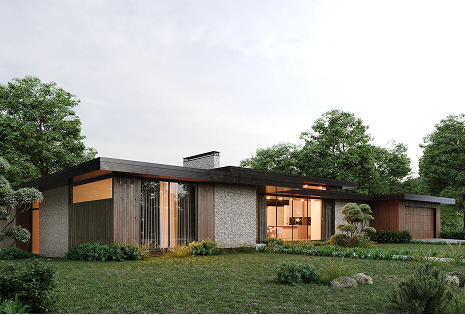
Building a house in Cyprus in 2026 costs from roughly €1,900 per square metre for the construction alone — €2,000–€2,500 for a standard home, €2,500–€3,000 for a high specification and more for a luxury villa. That rate is quoted on covered area, which is not the same measure the VAT thresholds use. Land, professional fees, permits, utility connections and VAT sit outside it, and on most projects they add another 30–50% on top.
So a 180 m² family home costs roughly €342,000–€540,000 to build, and lands somewhere around €445,000–€810,000 as a finished project on a plot you already own. The width of that second range is the honest part: specification and site conditions, not the district, decide where inside it you end up.
That second number is the one that matters, and it is the one almost nobody quotes. This guide takes a single house and follows the money all the way from the plot to the keys, so you can see which line items are fixed, which ones move, and which ones only appear once the site has been surveyed. Where a topic has its own page — VAT, permits, build duration, the individual cities — this guide points there instead of repeating it.
Construction costs in Cyprus are still climbing, though far more gently than during the 2022–2023 spike. The Statistical Service publishes a monthly Price Index of Construction Materials, and in June 2026 it stood at 122.74 points against a 2021 base of 100, up 0.55% on the month and 3.12% on the year (CYSTAT, June 2026). Across the first half of 2026, materials were about 1.62% dearer than the same period in 2025.
Underneath that headline, the movement is uneven, and the spread is what matters if your design leans on one trade:
| Material group | Annual change (June 2026) |
|---|---|
| Electrical network components | +6.23% |
| Metallic products (steel, reinforcement) | +5.02% |
| Wood, insulation, chemicals, plastics | +4.07% |
| Cooling and climate control equipment | −1.67% |
Same figures as the table above, drawn so the spread is visible: three groups rising faster than the 3.12% headline and one falling. If your design leans on one trade, its bar matters more than the average. Source: CYSTAT Price Index of Construction Materials, June 2026.
Insulation held flat while plastics rose by more than six per cent, so two houses of identical size can drift apart on materials alone depending on what they are specified in.
Inside that third group, the range is wider still. Plastics reached 132.41 points, up 6.53% on the year, and timber 126.91 points, up 4.38%, while insulation materials did not move at all. Chemicals posted the largest monthly rise at 1.29%. For a budget written today, 3–4% a year is a sensible allowance between signing a design contract and signing a build contract, with steel-heavy structures on sloped plots carrying the most exposure.
Rates per square metre are useful for a first sanity check and useless for a decision. Below is the same 180 m² house priced as a whole project, on a serviced, reasonably level plot, at a good mid-range specification. Land is excluded because it varies more than all other factors combined.
| Stage | Typical cost | Notes |
|---|---|---|
| Topographic and geotechnical survey | €1,500–€4,000 | Before you commit to a design, ideally before you buy the plot |
| Design, engineering, quantity surveying | Agreed in a written commission | See the architect fees guide for what this covers |
| Planning and building permit fees | Statutory, scale-based | Paid to the District Local Government Organisation |
| Construction, 180 m² at €1,900–€3,000/m² | €342,000–€540,000 | The figure most quotes refer to |
| Site works and groundworks | €5,000–€60,000+ | Flat serviced plot at the bottom; slope and retaining walls at the top |
| Utility connections | €2,000–€25,000+ | Priced by distance to the network, not floor area |
| External works, boundary, landscaping, pool | €15,000–€80,000+ | Routinely left “outside the budget” until it reappears |
| VAT at 5% or 19% | Five to six figures | Decided by the design; see the VAT guide |
The same table, drawn to one scale. One bar is long and narrow — construction is both the biggest line and the most predictable. The short bars are where two identical houses diverge: each is small against the total, each is open-ended, and together they are the 30–50% that sits outside the quoted rate. Three lines have no bar at all, because no range can honestly be drawn for them.
The construction line is the most predictable number in the whole table. The lines above and below it are where two projects of identical size end up €150,000 apart.
The plot. Slope is the single biggest swing. A stepped foundation, a retaining wall and an access road for machinery can add the price of a small apartment to a build that looked competitive on paper, and none of it improves the house you end up living in. Distance from the mains does the same thing more quietly: services are priced by the metre.
The specification. Glazing spans, structural gymnastics, imported stone, a pool, full climate control. Each is a legitimate choice; together they are the difference between €1,900 and €3,000 or more per square metre. This is the one variable you fully control, and the only one that is genuinely optional.
The buildable area. Above 190 m² of buildable area, the reduced 5% VAT rate disappears, and 19% applies to the whole property, which on a €400,000 build is a swing of about €56,000. That threshold is set on the drawings, long before anyone pours concrete. The VAT guide sets out how it is measured and claimed.
The contract. A fixed scope priced against complete drawings behaves very differently from a low headline number priced against half a design. Most overruns we are asked to unpick are not one disaster but thirty small variations, agreed verbally and priced afterwards. Our guide on choosing a building contractor covers the contract terms that prevent it.
≈ €56,000 on a €400,000 build. The line is drawn on the drawings, long before anyone pours concrete.
Of the four variables on this page, this is the only one that behaves as a step rather than a slope: a square metre either side of it changes the rate on the entire property. How the area is measured and claimed is set out in the VAT guide.
Less than most buyers expect, at least for the building itself. Materials come through the same ports, the seismic code is national, and trades travel. What changes by district is land, contractor availability, and the character of the plots on offer.
If a builder quotes you a district-specific rate per square metre with no reference to your plot, treat it as a conversation opener rather than a price.
Two items sit past the end of most budgets and both cost money.
Once construction finishes, the Certificate of Final Approval confirms the building matches its permits. Issuing it commonly takes 6 to 18 months, and title deeds follow after that, historically anywhere from 12 to 30 months depending on complications. Neither is a construction cost, but both carry professional fees, and both affect when you can sell or mortgage cleanly.
The second is VAT and transfer fees, which interact in a way that surprises people. A sale subject to VAT, at either rate, carries no property transfer fees at all. A resale falls outside VAT and carries transfer fees on the statutory 50%-reduced scale instead (Department of Lands and Surveys Fees and Charges Law, CAP. 219, art. 10(1) and 10(2)). Stamp duty no longer enters the calculation; it was abolished on property contracts from 1 January 2026 under Law 239(I)/2025.
The survey is a four-figure spend that routinely reveals a five-figure problem.
The drawings decide the build cost, the VAT band and half the permit timeline.
It is the most expensive line on many projects, and it is set with a pencil.
You are not buying a price, you are buying the right to negotiate variations later.
Your project is decided by the total of the plot, the drawings, the permits, the contract and the tax band, rather than by the rate per square metre. Every one of those is settled before the first delivery arrives on site. A survey and a properly built budget cost a fraction of a percent of the project and routinely change what people choose to build.
If you want the drawings and the numbers prepared together rather than in sequence, that is what our construction budget and feasibility service does. For the parts of this that have their own detail, see the guides on building permits, VAT and how long a build takes.
The two permits you need to build in Cyprus, who issues them since the 2024 reform, how the fast-track works and how long each stage really takes.
A neighbourhood-by-neighbourhood read of where Limassol's luxury villa pricing actually sits this year — and why the top of the market has moved faster than the middle, while entry-level premium has barely moved at all.
Cyprus against Portugal, Greece and southern Spain — a side-by-side look at rental yield, entry cost, and the regulatory friction a foreign buyer actually meets on the ground in each market.